

**Because Singapore is "the quickest and most powerful hub for sharing stories and food culture with the world."**
The first store of the Western Food Culture Project is
"Why Singapore?"
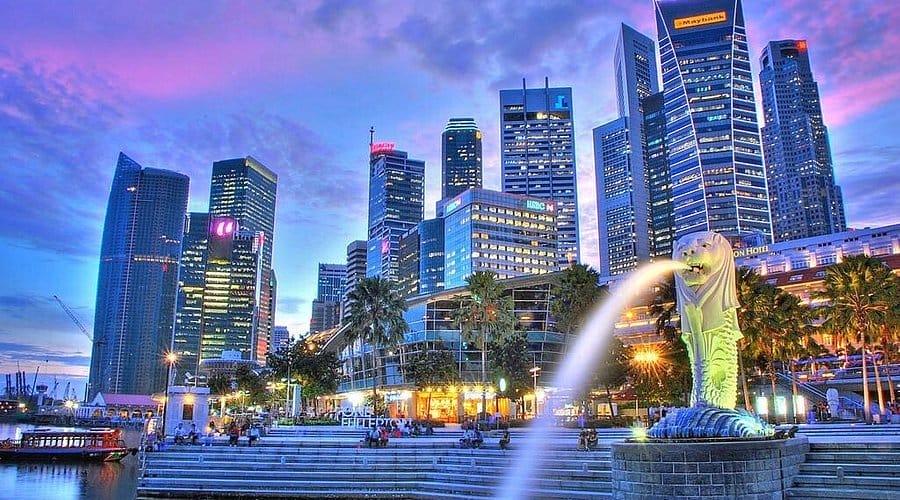
Spreading Western food culture to the world.
As its first base,
We have positioned Singapore as our first store.
Its role as a crossroads in Asia, its international acclaim, and its understanding and maturity of food culture.
> ※ <
Singapore is a place where Western food culture can be presented to the world.
It was the most logical city to start with.
- Vision Statement for Investors (Summary) -
1. Why Singapore? (Reasons for market selection)
① Maturity of the restaurant market
High disposable income
A national trait of eating out frequently
Tolerance for premium price range
② Multi-ethnic nation = test market
Chinese, Malay, Indian, and Western
Able to verify the diversity of tastes in one city
It is possible to build an expansion model to accommodate Halal etc.
3) Function as a hub in Asia
Spread to the ASEAN economic zone
Extensive contacts with international investors
Transparency of the legal system
Singapore is not a "profit-oriented store opening"
A demonstration base for expansion into AsiaIt is ideal as.
2. Business Concept
YOSHOKU by Monsieur
Western cuisine that has evolved uniquely in Japan
“Redefining it as a "cultural asset"
Optimize for the global market.
It's not just about exporting Japanese food.
It's not ramen or sushi.
"Japanese-style Western cuisine"
Establishing an untapped category.
3. Revenue Model
Phase 1: Small-scale flagship model (experimental type)
Estimated seating capacity: 20-30
Average customer spend: SGD 28–45
Turnover rate: 1.5-2.0
Initial investment: Controlled design (simple interior)
the purpose:
✔ Brand establishment
✔ Data Collection
✔ Product improvement
✔ Cost rate and operation optimization
Phase 2: Horizontal Expansion Model
Central kitchen concept
Export of frozen and semi-processed products
Department store/commercial facility pop-up
Phase 3: Intellectual Property
Recipe Standardization
Trademark development
Franchise Design
Books and online courses
Chef Training Program
Finally
Three-tiered revenue structure: Food & Beverage + IP + EducationBuild.
4. Differentiation Points
✔ Differentiate yourself from the Japanese food boom
✔ Storytelling-focused
✔ Historical background of Japanese chefs (50 years of experience)
✔ “Cultural export” brand design
It's not just about serving food,
Translation project of modern Japanese food cultureis.
5. Investor return design (direction)
Dividend model
Equity investment type
Capital gains when selling a business
Franchise Royalty Revenue Sharing
The exit strategy is
① Selling businesses after expanding into ASEAN
② Capital alliance with global partners
6. Risk Management
✔ Start small
✔ Minimize fixed costs
✔ Data-driven deployment
✔ Collaboration with local partners
“It's not just about expansion,
Verify → Adjust → ExpandProceed in the following order.
7. Intrinsic Value
Western cuisine has evolved in Japan for over 100 years.
but,
It is still undefined in the global market.
This undefined market
The first to define
Become a category owner.
The first store in Singapore is
This is the beginning of the definition.